A chimney cap is the metal cover mounted over the flue opening that keeps rain, birds, squirrels, and windblown leaves out and stops burning embers from landing on the roof. Wind is the most common reason a cap fails…
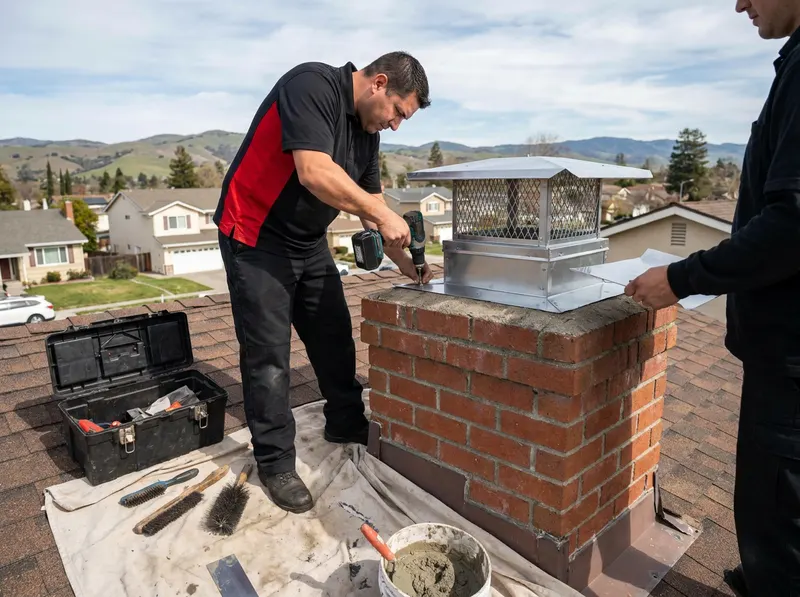
A chimney cap is the metal cover mounted over the flue opening that keeps rain, birds, squirrels, and windblown leaves out and stops burning embers from landing on the roof. Wind is the most common reason a cap fails in Fremont, the gusts that funnel through Niles Canyon and roll across the ridgelines near Mission Peak can lift a screw-mounted cap loose. When a Fremont homeowner says a storm blew my chimney cap back from my chimney, the fix is usually a reattach: the cap is realigned over the flue tile and re-secured with stainless screws or tension straps. If the cap is bent, rusted through, or missing entirely, replacement is the correct call.
Deciding between repair and replacement comes down to the metal. A galvanized cap that has surface rust but a solid frame can often be reattached and left in service; a cap with rust holes, split welds, or a collapsed spark-arrestor screen should be replaced, because a torn screen no longer meets the spark-arrestor requirement that matters near the dry hills around Mission San Jose and Coyote Hills. Stainless-steel caps resist the coastal-fog corrosion common in Ardenwood and Centerville far better than galvanized and typically last 15, 20 years, which is why most replacements installed here are stainless or copper.
Damage to the chimney cap and damage to the chimney crown are two separate problems that are easy to confuse. The cap is the removable metal cover; the crown is the sloped concrete or mortar slab that seals the top of the masonry around the flue. A cracked crown lets water into the brickwork and freezes in the cooler Warm Springs and Glenmoor mornings, widening the crack, chimney crown repair seals those cracks with a flexible crown coat, a job separate from the cap itself. Both are checked together during a cap inspection, so a homeowner who calls about one problem finds out whether the other exists.
The National Fire Protection Association standard NFPA 211 and the Chimney Safety Institute of America (CSIA) treat the cap and crown as part of the chimney's protection against water intrusion and stray sparks. A Level 1 inspection covers the readily accessible parts of the chimney, including the cap and crown visible from the roof or ground; a Level 2 inspection is used when a component has been damaged or after a chimney fire or property sale. Sizing matters more than most people expect, a cap must match the outside dimensions of the flue tile, so a single-flue cap for a 13x13 tile will not fit an 8x13, and a measurement taken during the free on-site estimate prevents ordering the wrong size. A homeowner in Irvington, Cabrillo, Sundale, or Brookvale who has a damaged chimney cap and wants something a sweep can take a look at and potentially fix can have it measured and quoted before committing.
Every job gets a firm, written price after a free on-site visit.
Tell us about your chimney cap repair & replacement job in Fremont and we'll send a clear, written quote, usually the same day.
 Fluefox Chimney Sweep