A home chimney water leak in Fremont most often comes from four points, not the brick face: the crown (the concrete slab on top), the flashing (the metal seal where the chimney meets the roof), the mortar joints, and a…
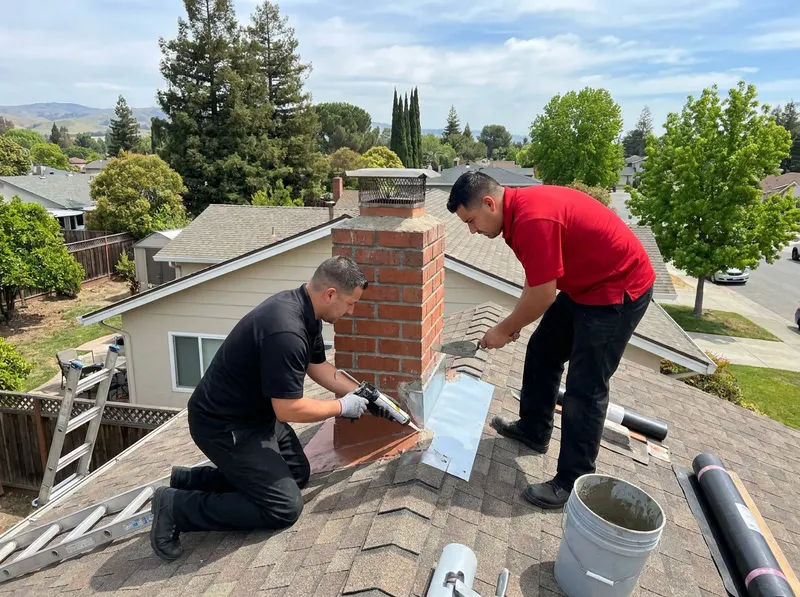
A home chimney water leak in Fremont most often comes from four points, not the brick face: the crown (the concrete slab on top), the flashing (the metal seal where the chimney meets the roof), the mortar joints, and a missing or damaged cap. During heavy Bay Area winter rain, water follows the path of least resistance, so a stain on a Niles or Centerville ceiling near the fireplace usually traces back to one of these entry points rather than the wall directly below. A leak inspection identifies which point is failing before any product is applied.
Waterproofing and leak repair are two different jobs that solve two different problems. Chimney waterproofing uses a breathable siloxane-based water repellent, which blocks liquid water from soaking into porous brick while still allowing water vapor from inside the flue to escape; a paint-on non-breathable sealer traps moisture and causes brick to spall and flake, which is why the Chimney Safety Institute of America (CSIA) recommends vapor-permeable products. If the brick is sound but soaking up rain, waterproofing is the fit. If water is entering through a cracked crown, lifted flashing, or open mortar joints, sealing the masonry alone will not stop it, the crack or gap must be repaired first, then the surface waterproofed. A chimney that has both porous brick and a cracked crown needs both steps in sequence.
Decision guidance by situation: if the chimney is under 10 years old with tight mortar and a stain appearing only in the heaviest storms, a breathable water repellent is usually enough. If there is a visible gap between the metal flashing and the roof in an older Irvington or Glenmoor home, re-flashing and sealing comes first. If chunks of the crown have broken off or the mortar joints show daylight, crown rebuild or repointing is required before waterproofing has any lasting effect. Leaking chimney repair on a two-story roof in Mission San Jose or Warm Springs costs more than a single-story ranch in Sundale because of the added access and safety setup.
A leak inspection follows a set order. First, the exterior top is examined for crown cracks, cap condition, and chase cover rust. Second, the flashing seam is checked where the chimney passes through the roofline. Third, the mortar joints and brick face are examined for gaps and spalling. Fourth, the findings are documented with photos and a written estimate. This exterior review aligns with the NFPA 211 standard for chimney inspection; a Level 1 inspection covers readily accessible areas, and a Level 2 inspection adds attic, crawl space, and video flue review when a leak may have reached interior framing. The on-site estimate for a chimney leak is free.
One common misunderstanding: a smell of smoke or a soot problem is a sweeping issue, while a water stain or damp odor after rain is a leak issue, the two are inspected and priced separately. Homes near Ardenwood, Cabrillo, and Brookvale with older clay flue tiles sometimes show interior staining that turns out to be a rusted chase cover rather than the crown, which is why the entry point is confirmed before any repair is quoted.
Every job gets a firm, written price after a free on-site visit.
Tell us about your chimney leak repair & waterproofing job in Fremont and we'll send a clear, written quote, usually the same day.
 Fluefox Chimney Sweep