Chimney problems in Fremont fall into two families: masonry and wood. Masonry issues show up as gaps, powdery joints, or loose brick where the mortar has failed, repointing grinds out the old joint and packs in fresh…
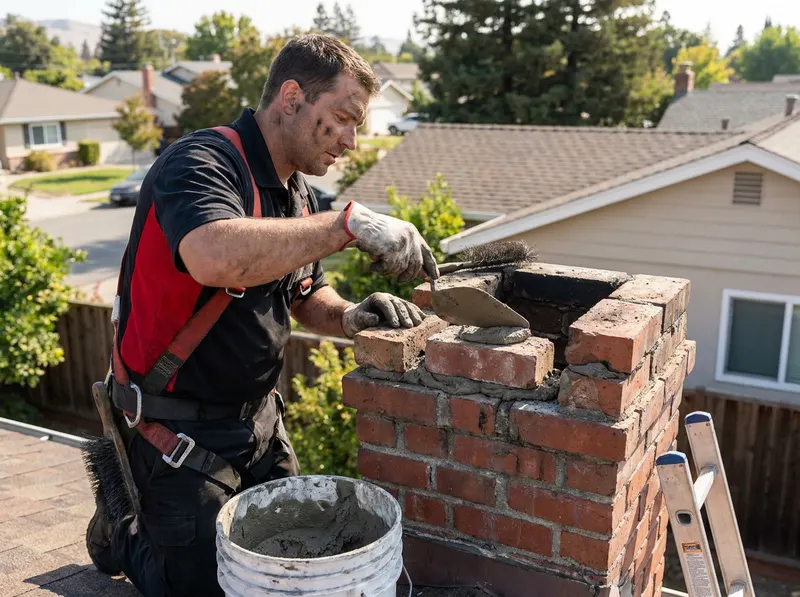
Chimney problems in Fremont fall into two families: masonry and wood. Masonry issues show up as gaps, powdery joints, or loose brick where the mortar has failed, repointing grinds out the old joint and packs in fresh mortar so water stops seeping behind the face. Wood issues are less visible: many Fremont homes, especially older Craftsman and mid-century houses in Niles, Centerville, and Glenmoor, have a wood-framed chase behind the exterior finish. When flashing leaks or mortar cracks let water in, the wood underneath the mortar can rot quietly for years. Repair of the wood structure of a chimney means removing the damaged framing, treating or replacing the studs and sheathing, and reflashing so the leak that caused the rot does not return.
Deciding which repair fits depends on where the water is getting in. If the chimney smokes, smells, or shows only surface soot, that is a cleaning or inspection matter, not structural repair. If you see brown staining on the ceiling near the chimney, soft or spongy wood at the base of the chase, or peeling paint on the exterior wood trim, the framing might have some wood rot and a Level 2 inspection is the right first step. The Chimney Safety Institute of America (CSIA) defines a Level 2 inspection as the standard whenever a property changes hands or a suspected problem needs a closer look, including camera scanning of the flue. NFPA 211 sets the annual inspection baseline for all chimneys and vents. Booking the inspection before the repair keeps the scope honest, a $350 mortar patch is very different from a $2,500 framing rebuild, and the inspection tells you which one you actually have.
Prefab fireplaces are their own category. Lennox fireplaces and similar factory-built units in Warm Springs, Ardenwood, and newer Cabrillo and Sundale homes use metal fireboxes, refractory panels, and dedicated flue pipe rather than brick and mortar. Repairing them means replacing cracked refractory panels, worn gaskets, or damaged flue sections with parts matched to the model, masonry repointing does not apply to these units. A cracked refractory panel is a common finding and is a fire-safety issue worth addressing before the panel fails further.
Here is the typical sequence: first, a technician inspects the mortar, flashing, chase, and firebox on site; second, moisture and rot are traced back to the source of the leak; third, a written scope and price are given before work starts; fourth, the repair is done and the leak point is sealed so the damage does not recur. Workers on these jobs are bonded and insured, which matters when the repair opens up framing or roofline flashing. The free on-site estimate confirms the exact price and scope before anyone commits to the work.
Every job gets a firm, written price after a free on-site visit.
Tell us about your chimney repair job in Fremont and we'll send a clear, written quote, usually the same day.
 Fluefox Chimney Sweep