A chimney rebuild becomes necessary when the masonry can no longer be patched, for example when a fallen limb or earthquake knocked about half the chimney down and put cracks in the rest of it. The Chimney Safety…
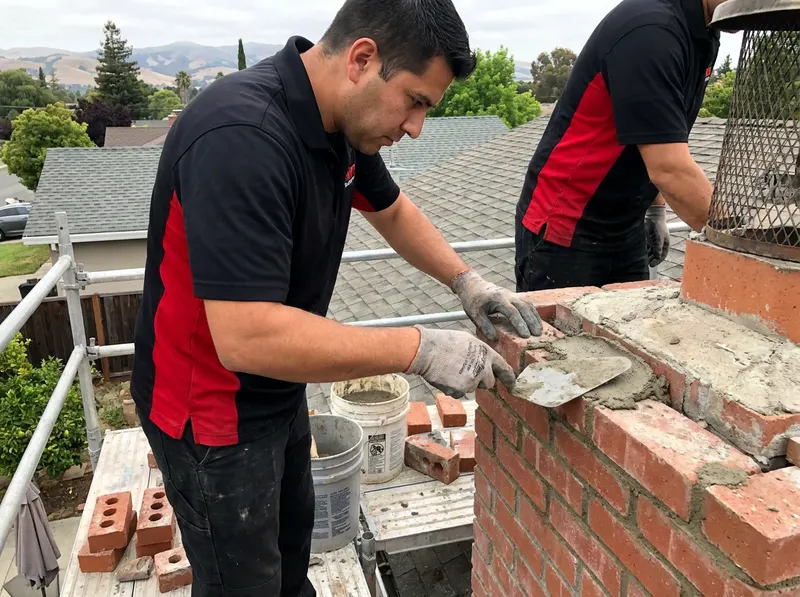
A chimney rebuild becomes necessary when the masonry can no longer be patched, for example when a fallen limb or earthquake knocked about half the chimney down and put cracks in the rest of it. The Chimney Safety Institute of America (CSIA) defines a Level 2 inspection as the standard after such an event, because it checks the flue, the crown, and the structure behind interior walls, not just the visible face. NFPA 211 sets the clearance and construction requirements a rebuilt chimney must meet, so a proper rebuild is measured and mortared to code rather than simply stacked back up.
The right fix depends on how far the damage runs. If the mortar joints are crumbling but the brick is sound, tuckpointing and chimney masonry repair restore the joints for a fraction of a rebuild's cost. If the crown, the concrete slab on top, is cracked, water gets in and freezes, which is the most common reason a chimney fails in the first place; a crown pour or cap replacement handles that. When individual stones have shifted or popped loose, chimney stones resets pin them back into a level course. A full replacement of the chimney is reserved for stacks that are leaning, spalling (face of the brick flaking off), or structurally compromised above the flashing, a partial patch on a failing stack fails again within a season or two.
Fremont's older housing stock drives a lot of this work. Century-plus masonry around Niles and the Mission San Jose district was often laid with soft lime mortar that erodes decades faster than modern portland mixes, so repointing is common there. Homes near Niles Canyon and along the fault-influenced Warm Springs and Irvington corridors see cracking from ground movement, while wind-driven rain off the bay dampens exposed stacks in Ardenwood, Centerville, Cabrillo, Glenmoor, Sundale, and Brookvale, accelerating crown and mortar failure. A rebuild in these areas is matched to the existing brick color and coursing so the repair does not stand out against the original house.
The sequence on a rebuild job is straightforward. First, the damaged section is dismantled down to a sound, load-bearing course. Second, the flue and firebox are inspected against Level 1 or Level 2 standards to confirm nothing hidden was damaged. Third, new brick or reset stone is laid in fresh mortar to the correct clearance. Fourth, a new crown is poured and a cap installed to keep water and animals out. Fifth, the mortar cures before the chimney returns to use. A chimney crack repair that stops at the surface without checking the flue behind it is the kind of shortcut that leaves a hazard in place, the inspection step is not optional on a sound rebuild.
Every job gets a firm, written price after a free on-site visit.
Tell us about your chimney masonry & rebuild job in Fremont and we'll send a clear, written quote, usually the same day.
 Fluefox Chimney Sweep